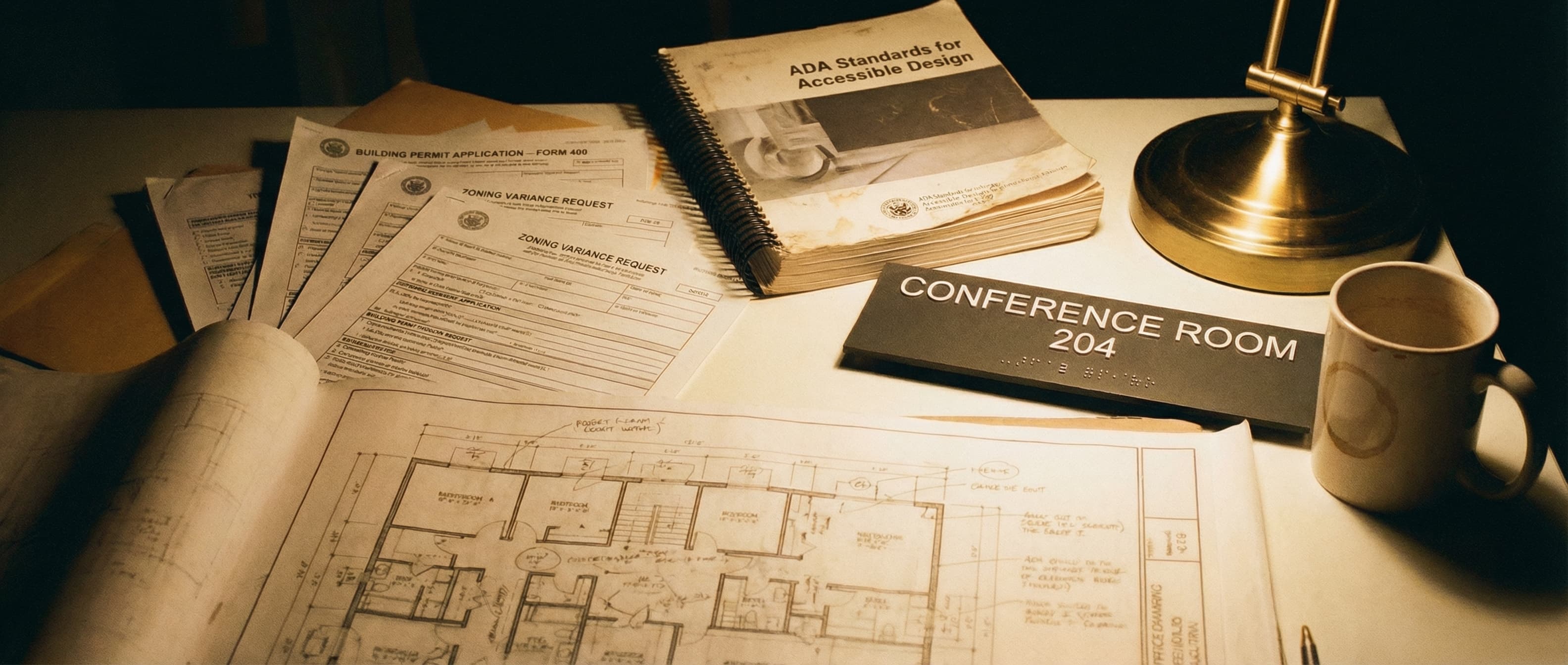
Wayfinding signage design
Signs that do the navigating
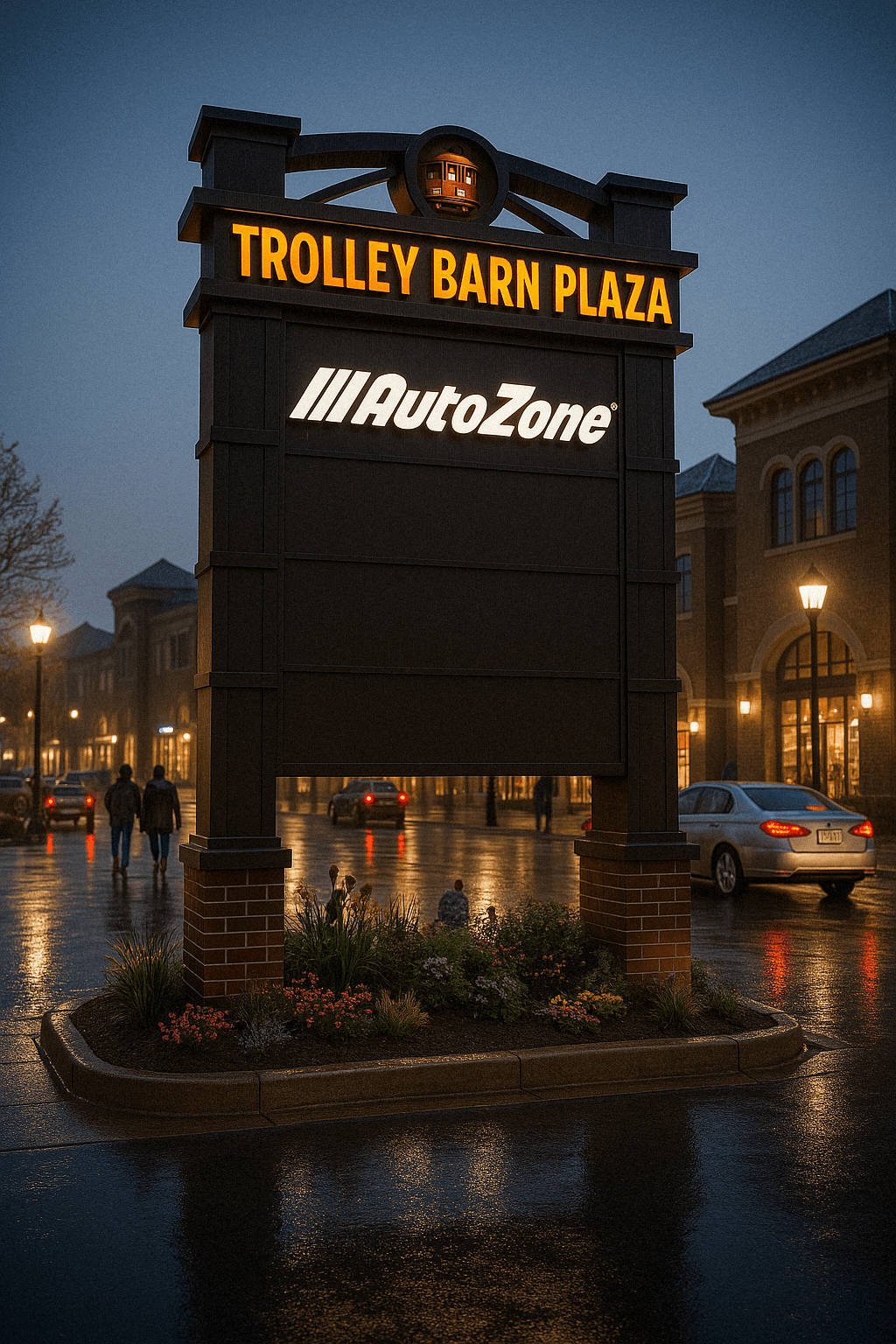
A wayfinding system is every sign a person reads on the way to where they're going: the monument at the entrance, the directional at the fork in the drive, the building ID, the floor directory, the room number outside the door. On its own, each one is just a sign. Designed together, they form a sequence that answers the next question a half-second before someone has to ask it.
We design that sequence and document it: one coordinated set, not a pile of one-off signs that don't agree with each other. Wayfinding and ADA signage are one discipline in practice, drawn as one set with the tactile and code signs designed in from the first sketch. It's the heart of our wayfinding & ADA work.
Sign type families
A defined kit of sign types (directional, identification, directory, regulatory, informational) drawn to one visual system.
Message schedule
Every sign, every message, every arrow, in one document, so the wording is decided once and stays consistent across the whole site.
Location plans
Each sign placed on the floor plan or site plan and keyed to the schedule, so nothing lands in the wrong spot during install.
Elevations and details
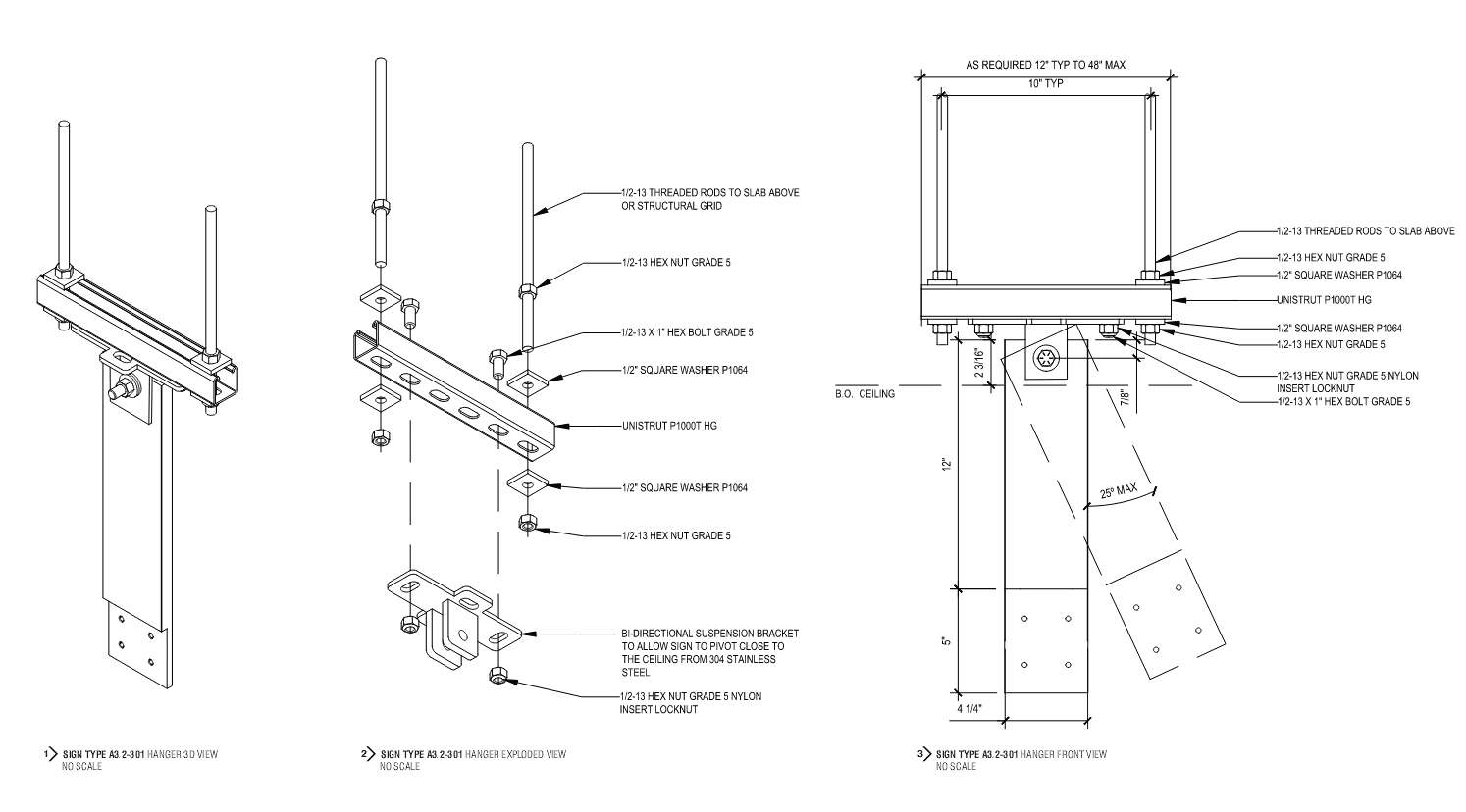
Sizes, materials, finishes, and mounting drawn to scale for fabrication, not just shown in a concept.
Permit-ready drawings
Submittal sets with the code and ADA citations a reviewer needs to approve the system.




We design and document wayfinding sign systems as permit-ready sets any qualified professional can bid and build from.
Why people get lost
People don't get lost because a building is complicated. They get lost because the signs were added one at a time, by different people, at different moments, with no plan holding them together.
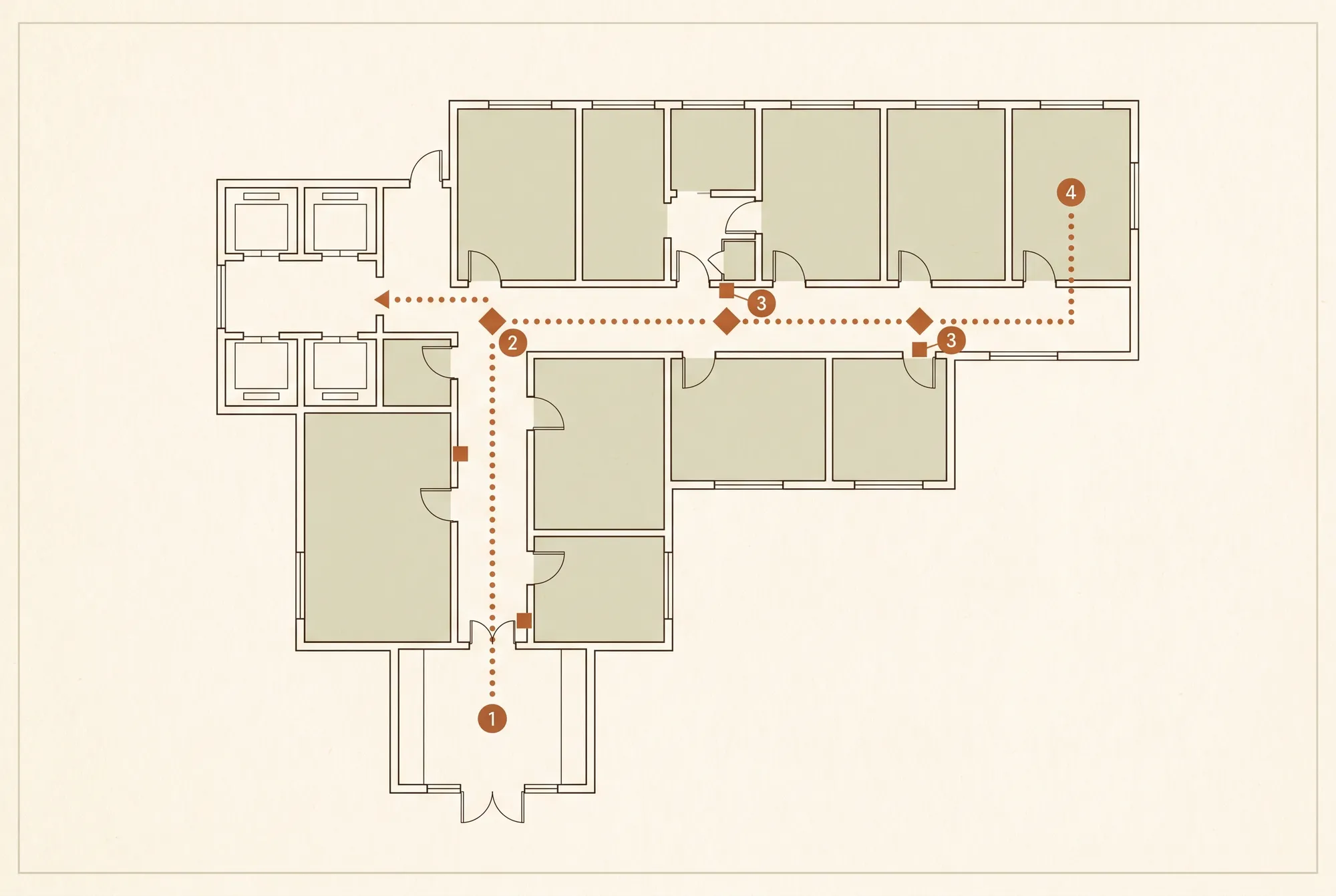
- Entry
The first question starts at the door, or in the parking lot before it.
- Decision points
Every fork where a visitor has to choose.
- Sign locations
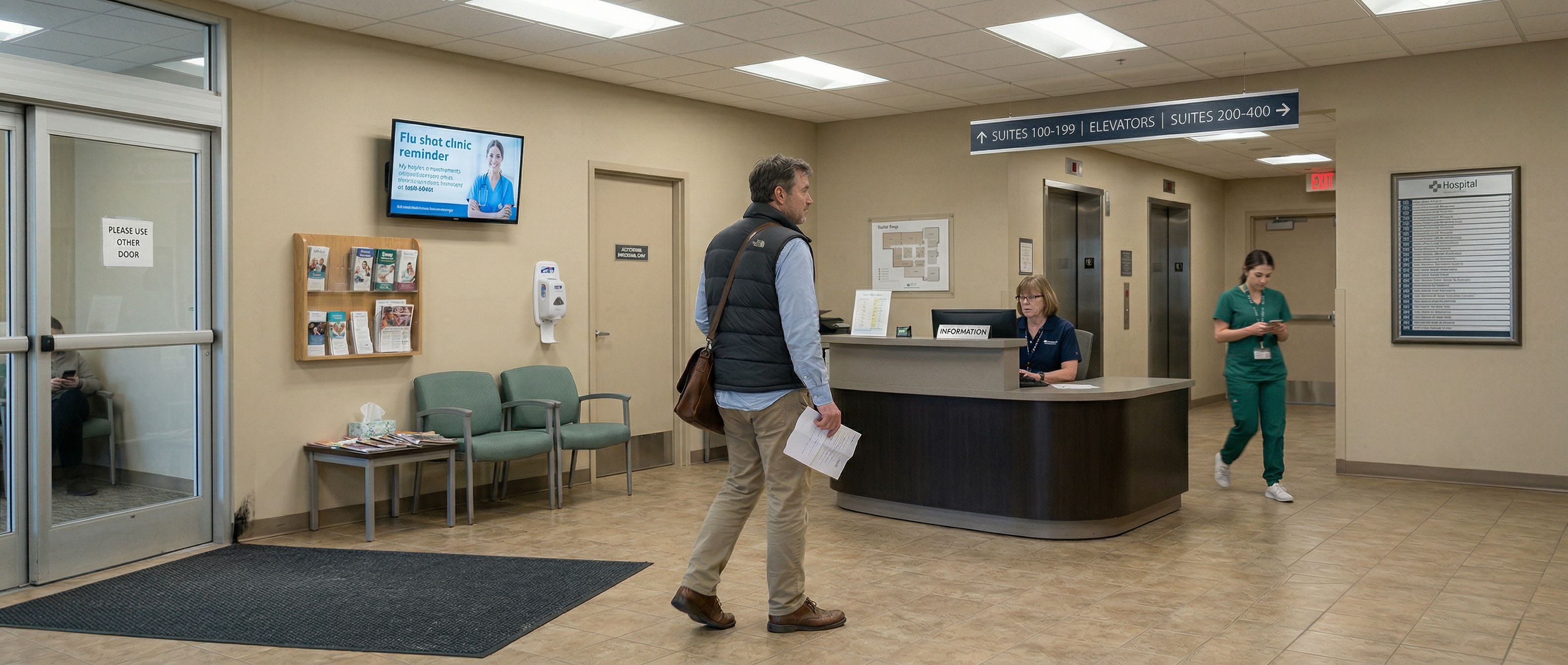
One sign type per decision, placed where the choice happens, wording locked by the message schedule.
- Destination
The room sign that ends the trip, tactile and ADA-compliant.
All of it is a design problem, and design is where we fix it.
Built for sites people get lost in
Campuses and healthcare
Multi-building medical centers, universities, and corporate campuses where a wrong turn costs real time and real stress.
Retail and mixed-use
Centers and developments where tenants need to be found and the whole property needs to read as one place.
Multi-building sites
Industrial parks, civic complexes, and anywhere a visitor arrives by car and finishes the trip on foot.
Facilities teams
Groups managing signage across a portfolio who need a standard to build from, not another batch of one-off signs.


Who we work with


Sign companies
White-label design and drawings for busy shops. We draw, you fabricate, and your client never knows we were involved.


Architects & designers
Signage and wayfinding documented to sit inside your set, on your schedule, drawn to the standard your drawings hold.

Facilities & property teams
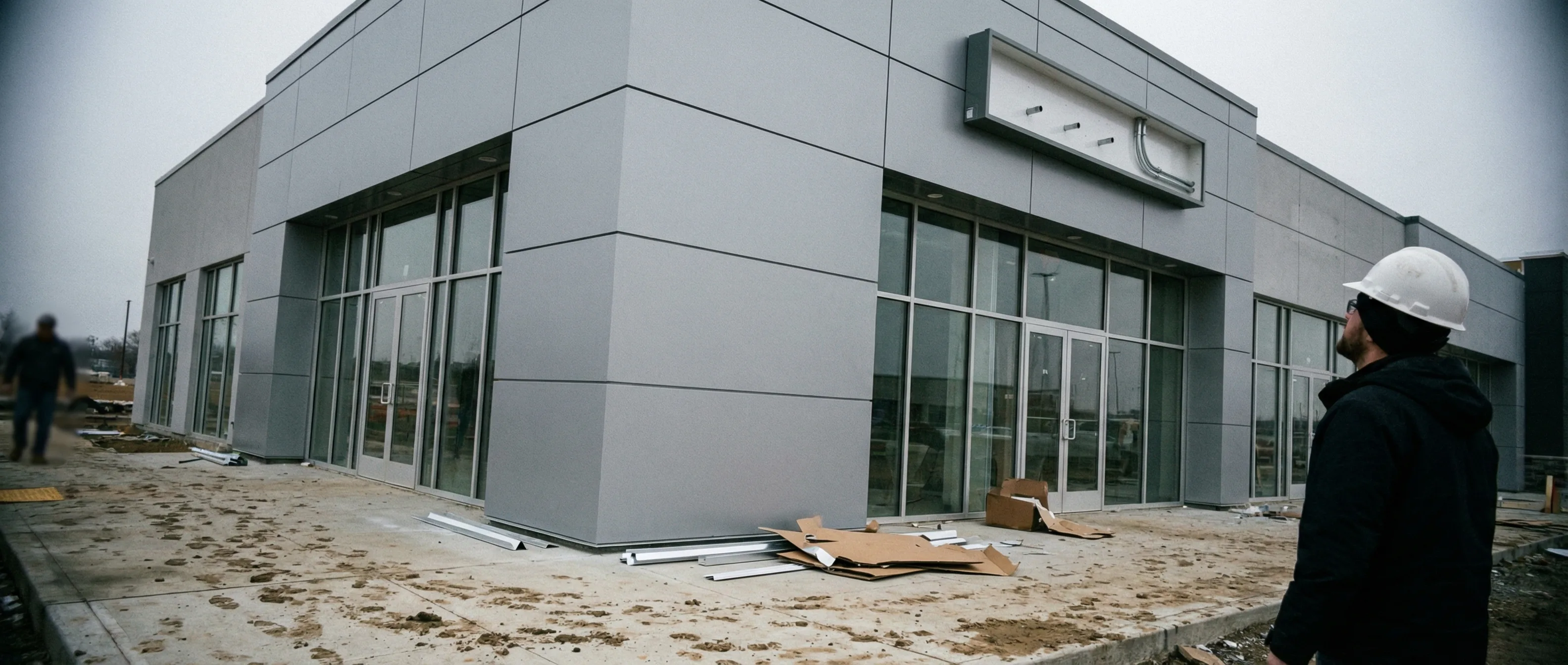
Wayfinding and sign standards for campuses, portfolios, and multi-building sites that have outgrown the signs they started with.


Brands & retailers
Sign programs that hold the brand across every location and bend to each local code, without ever losing the look you built.
Wayfinding signage, answered

Didn't find your question? Ask us directly — straight answers, no runaround.
- What's the difference between wayfinding and signage?
- Signage is the broad term for any sign, and wayfinding is the subset of signs that help people navigate a space. Every wayfinding sign is signage, but a channel-letter storefront sign is signage that isn't doing wayfinding. Wayfinding is signage with a job: get someone to their destination without a wrong turn.
- What's in a wayfinding signage package?
- A sign type family, a message schedule, location plans, elevations and details, and permit-ready drawings. Together they're one set a fabricator can build and a reviewer can approve.
- Do you handle ADA within wayfinding?
- Yes. Tactile characters, braille, contrast, and mounting heights are specified to code on every sign type that needs them, so the wayfinding set and the ADA set are the same set.
- How is a wayfinding system priced?
- By the size of the system, not by the sign. We count sign types and decision points rather than individual signs, because a 200-sign campus built from eight well-drawn sign types costs far less to design than the sign count suggests. We quote a flat fee against the defined scope once we've seen the site or its drawings.
Read more



Good signage
starts with a conversation.
Every project is different. Let’s talk about yours.