Wall sign design
Designed on the wall, not in a vacuum
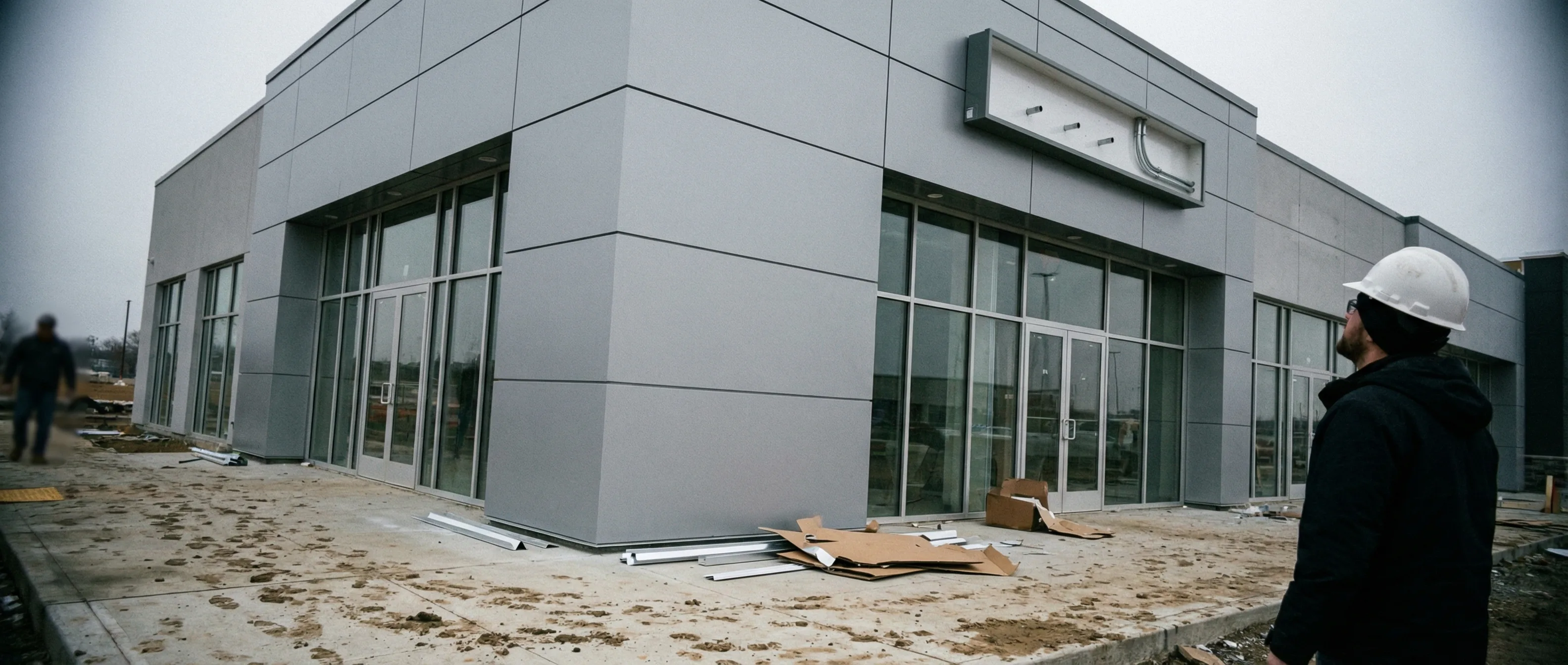
The most common failure in storefront signage is a sign designed on a white artboard and then dropped onto a building it never met: wrong scale for the sign band, fighting the architecture, blind to the tree that blocks it from the left turn lane. A wall sign is a piece of the elevation, and it has to be designed as one.
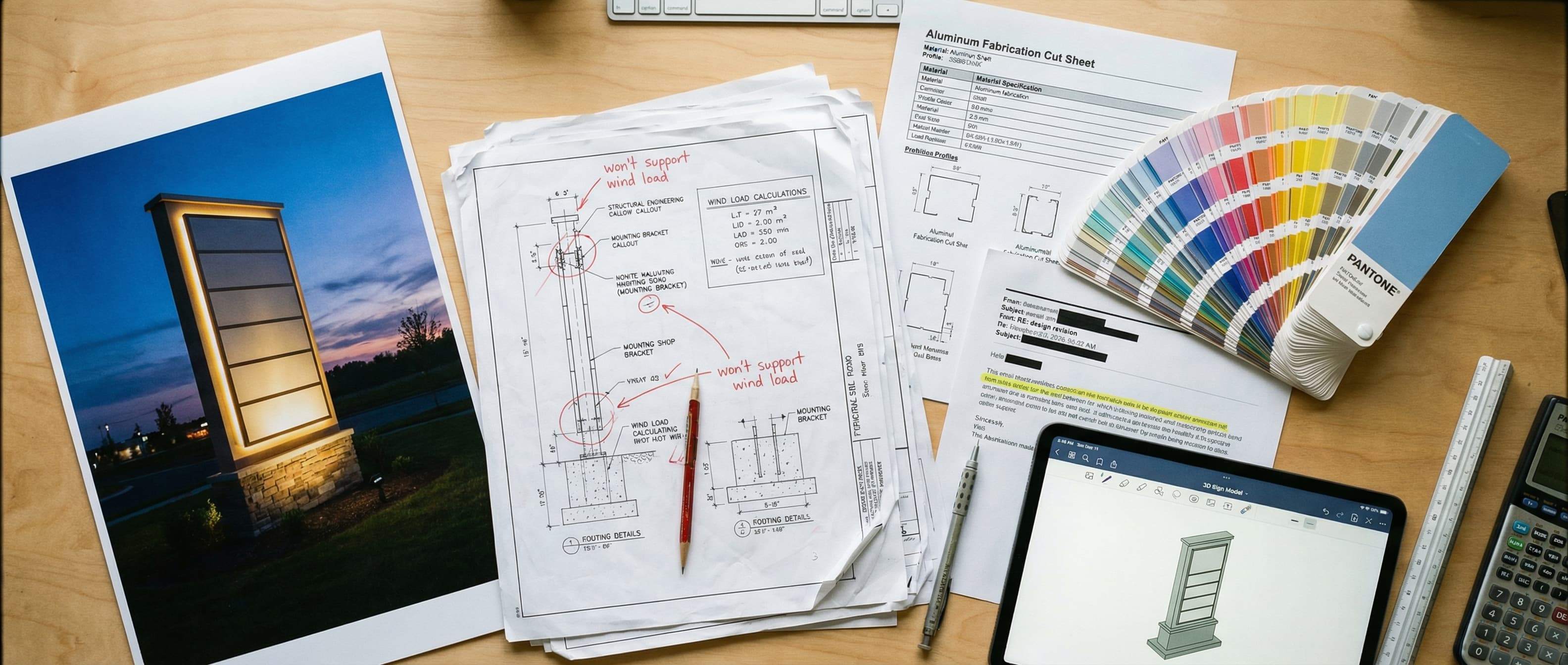
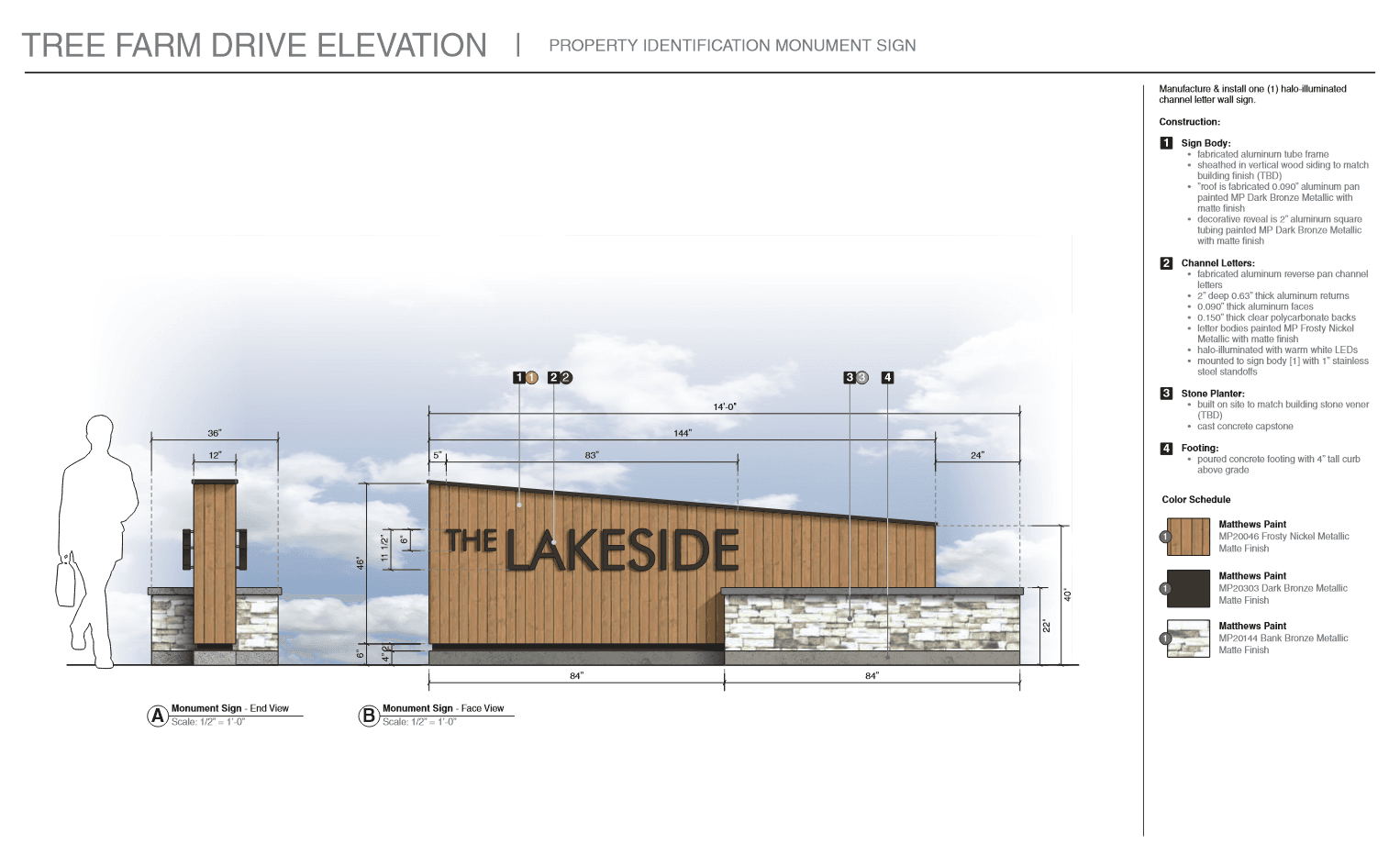
We start from a photo or drawing of the actual wall, design the sign in place, and document it. We don't fabricate or install, and any qualified shop can bid the set. It's one branch of our exterior signage work.
Scaled to the architecture
Designed on the actual elevation it will live on.
Sign area to code
Calculated the way the local ordinance counts it, shown on the drawing.
Landlord criteria
Read before designing and satisfied before submittal.
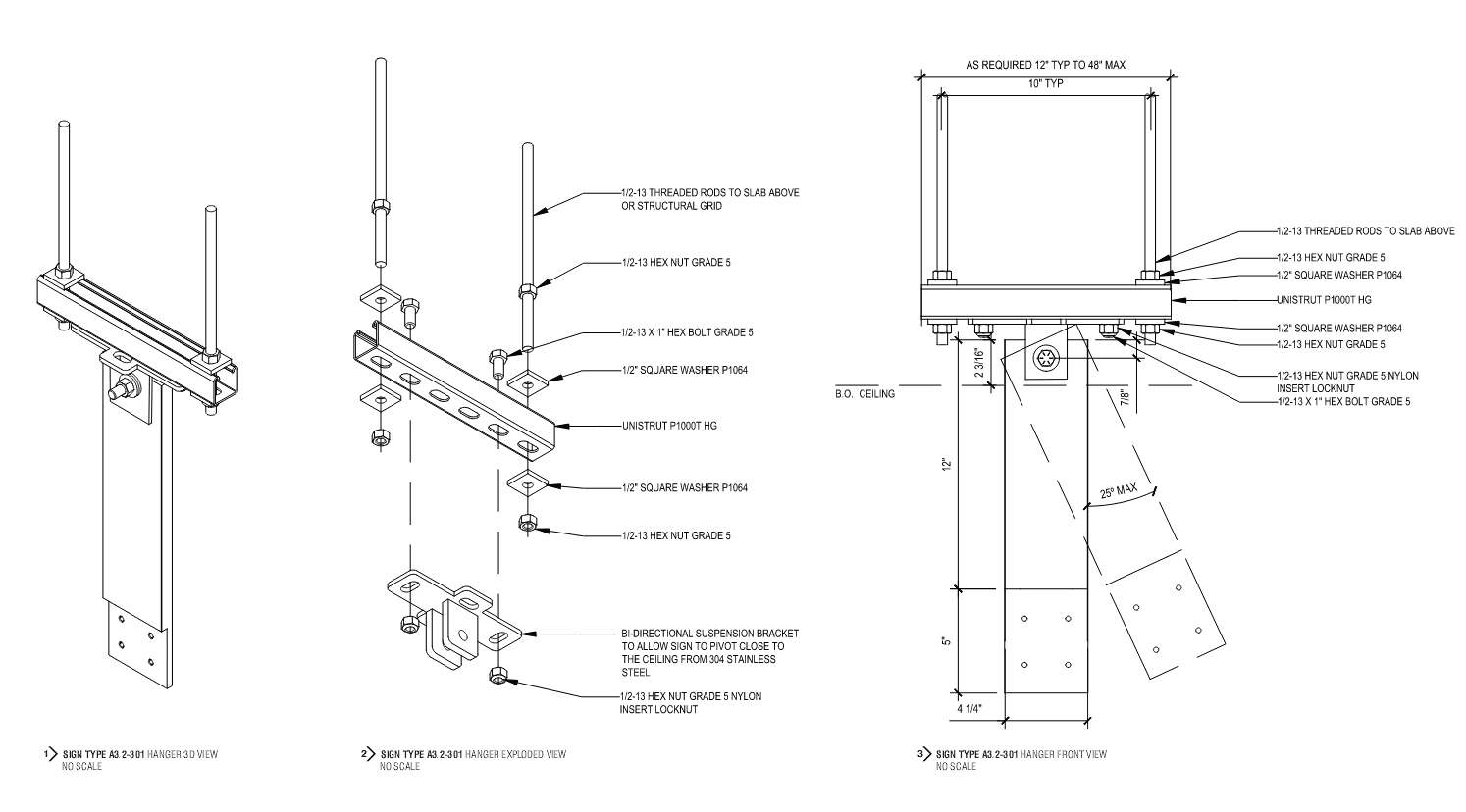
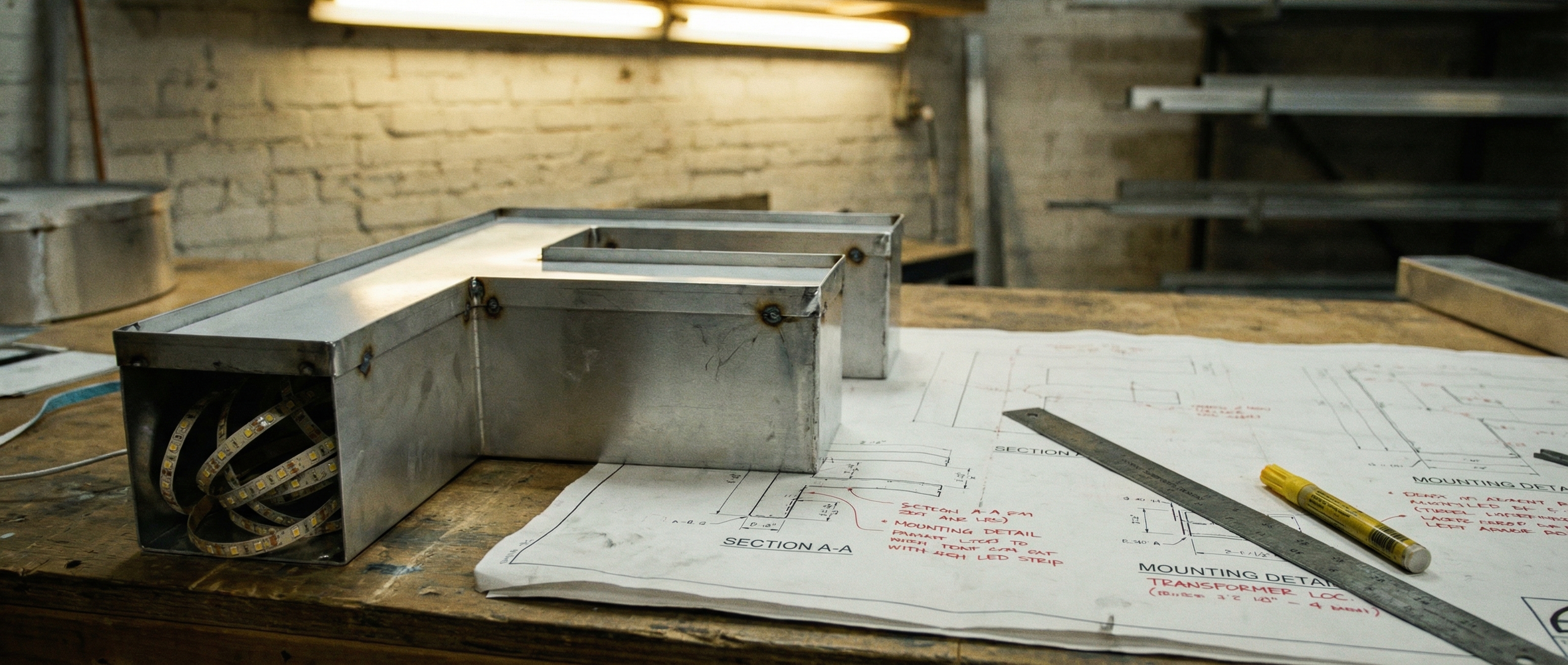
Mounting detail
Detailed for the actual wall construction, so install day holds no surprises.




How the code measures a wall sign
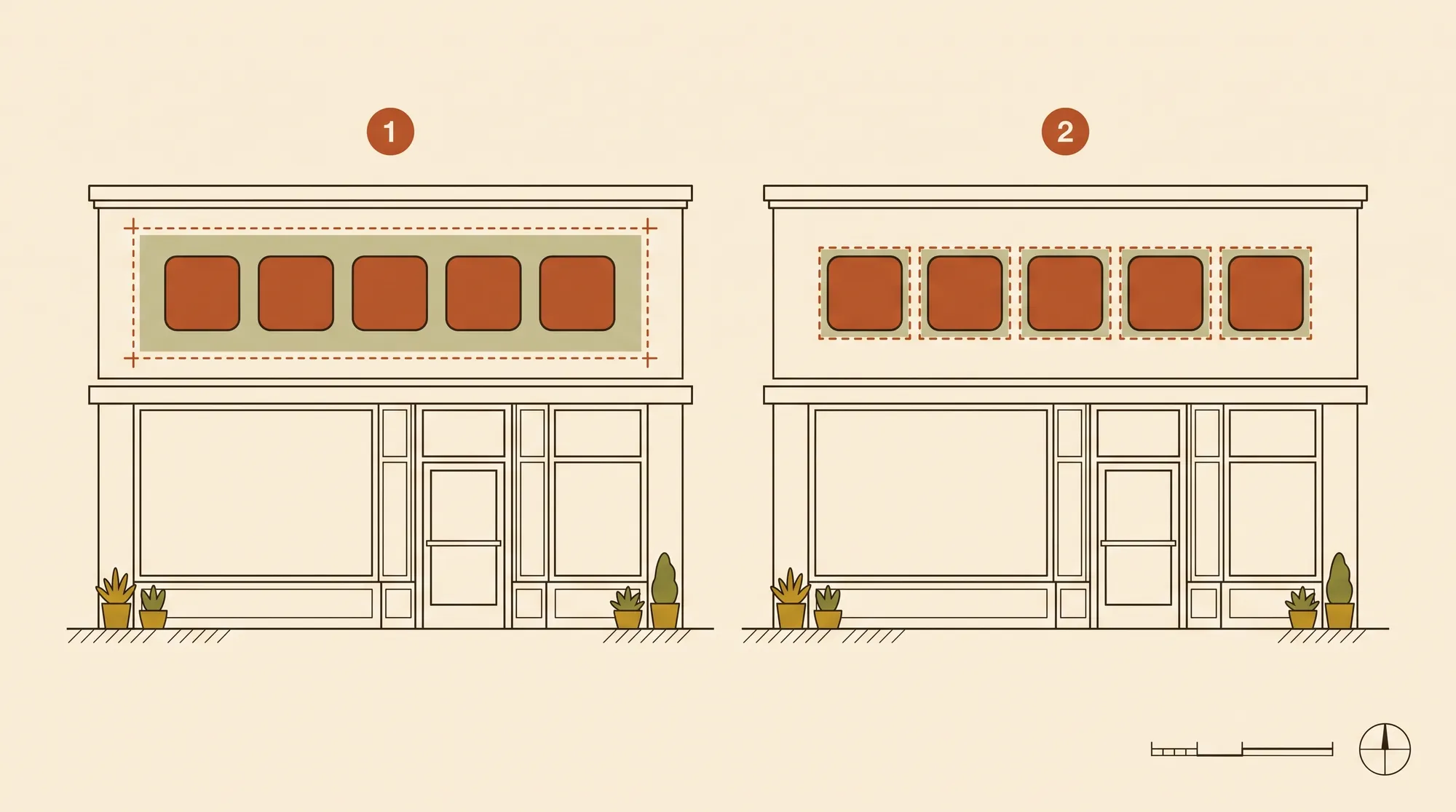
- Single bounding rectangle method
The smallest rectangle around the whole display counts, dead space included.
- Per-element method
Each letter or element is measured individually, and only the ink counts.



Who we work with


Sign companies
White-label design and drawings for busy shops. We draw, you fabricate, and your client never knows we were involved.


Architects & designers
Signage and wayfinding documented to sit inside your set, on your schedule, drawn to the standard your drawings hold.

Facilities & property teams
Wayfinding and sign standards for campuses, portfolios, and multi-building sites that have outgrown the signs they started with.


Brands & retailers
Sign programs that hold the brand across every location and bend to each local code, without ever losing the look you built.
Wall signs, answered

Didn't find your question? Ask us directly — straight answers, no runaround.
- What counts as a wall sign?
- Anything mounted flat to the building face: storefront signs, cabinets, painted graphics, dimensional letters on the fascia, parapet letters. Codes usually regulate them as one family with one area budget per elevation, which is why the whole wall has to be designed together instead of sign by sign.
- Cabinet sign or channel letters?
- A cabinet is one illuminated box with a printed or cut face, and it carries complex logos, gradients, and taglines for less money than letters can. Individual letters read as more permanent and more premium. The brand and the landlord's criteria decide it, and the letter side of the argument lives on the channel letters page.
- How is sign area calculated?
- By the ordinance's rules, not yours, and every jurisdiction draws the box differently. Some measure the smallest rectangle around the whole display, some let individual letters be measured individually, and the difference can double or halve your allowed sign. We run the calculation the way the local code writes it and show the math on the drawing, because area is the most common reason a wall sign gets bounced.
- Do landlord sign criteria override the code?
- You have to satisfy both, and the stricter one wins in practice. The city caps what's legal, the landlord's criteria cap what's allowed on their building, and the criteria are often tighter: raceway required, specific letter heights, no cabinets, no exposed conduit. We read the criteria before designing so approval is one round, not three.
Read more

Good signage
starts with a conversation.
Every project is different. Let’s talk about yours.