The Real Cost of Bad Sign Design
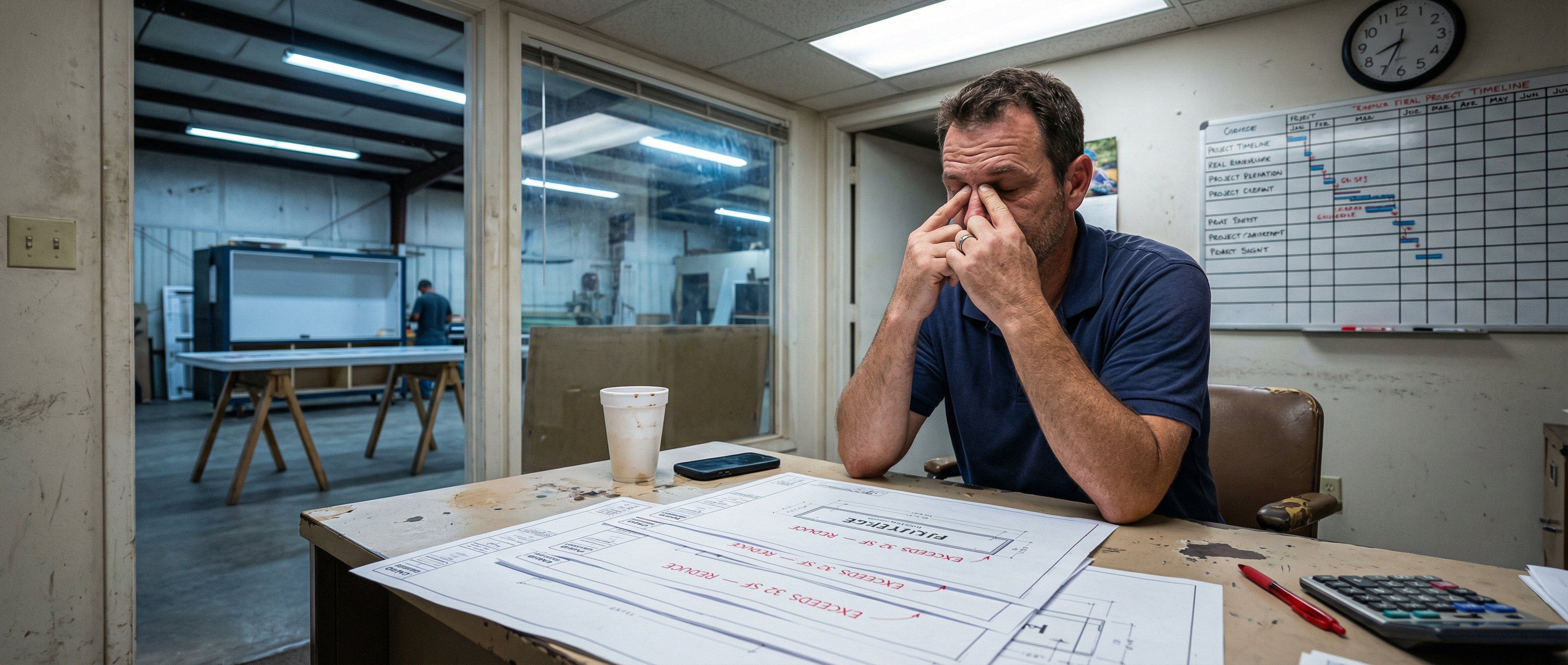
It's 9 AM on a Tuesday when your phone rings. The city planning department. Your stomach drops before you even answer because you know that call can only mean one thing.
It's 9 AM on a Tuesday when your phone rings. The city planning department. Your stomach drops before you even answer because you know that call can only mean one thing.
The sign you just designed, the one your client loved, the one you've already collected the deposit for and scheduled for fabrication, has a problem. You sent the plans in for a permit submittal, confident they would be approved. Now, the city says the sign exceeds the size restrictions.
No big deal, right? You'll just make it a little smaller. You redesign the sign, a less impressive version of the original, and your client, though disappointed, agrees. You send the plans in for another permit submittal.
Denied.
This time, you missed the illumination restrictions. The customer, who was so excited just a few weeks ago, is now questioning your competence. You're on your third redesign, and meanwhile, the fabrication schedule is backing up. Other customers are calling, asking where their signs are.
By the time you're done, you've spent three times the design hours you budgeted for. You've experienced two months of delays. Your reputation is damaged, your team is stressed, and the initial excitement is long gone.
This isn't a hypothetical horror story. I've watched it happen dozens of times. And every single time, it traces back to one thing: a design that looked pretty but ignored reality.
THE HIDDEN COST CATEGORIES
Bad sign design costs a lot more than a few extra hours of design time, and the real costs hide in four places.
Direct Financial Costs
The Revision Spiral: You budgeted $500 for the initial design, but after two permit rejections you've spent another $700 in redesign time. That's $1,200 on a design you budgeted at $500, plus rush fees to catch up with the fabrication schedule, for a less impressive end product.
Timeline Costs: Every week of delay eats production capacity, forces rush material orders and overtime on the jobs behind it, and delays your invoice while your vendors' bills keep arriving.
Material Waste: Materials pre-ordered for the wrong specs, components already fabricated that can't be used, substrate scrapped because the size changed.
Customer Relationship Damage
Your customer's excitement turns into frustration, every revision makes you look less competent, and they start wondering why you didn't know these things upfront.
Frustrated customers don't refer business. Word-of-mouth travels faster for bad experiences, and a customer who mentions your delays and complications in an online review can affect your reputation for years.
The relationship may not survive the project. The customer expects you to eat the costs of your design mistakes, which leads to arguments about who pays for what.
Operational Stress Costs
The stress ripples through the whole company. Design morale drops with constant revisions, fabrication is frustrated with changing specs, the office is fielding angry customer calls, and the project managers are juggling schedules that no longer work.
And you're the one losing sleep over it, spending your time on damage control instead of on the business.
The Compounding Effect
It's never just one project. A delayed job shoves the whole production schedule, a stressed team makes mistakes on other work, and a damaged reputation quietly costs you the bids you never hear about.
THE ALTERNATIVE
What Quality Design Costs: A higher upfront investment in design time, thorough research and planning, and professional documentation with permit-ready specifications from the start.
What Quality Design Saves: Zero permit rejections, a smooth fabrication process, happy customers who become referral sources, predictable timelines, and healthy cash flow.
A quality design might be a $1,500 investment. A bad design might cost $1,400 in revisions, $2,000 in delays, and $5,000 in lost referrals. That's $8,400 to avoid a $1,500 line item.
Real-World Examples
The Restaurant Chain Disaster: A multi-location rollout with a template design ignored local zoning variations. As a result, 8 of the 12 locations required major redesigns. The project was delayed by six months and had over $20,000 in revision costs. The franchise relationship nearly ended.
The Medical Office Victory: A complex project with ADA and healthcare regulations required upfront research that prevented three potential rejections. The permit was approved on the first pass, and the installation was completed early. The happy customer referred four similar projects.
The Retail Nightmare: A "beautiful" design for a retail sign ignored structural limitations of the building. When it came time to install the sign, the mounting was impossible. A complete redesign was required after fabrication, resulting in $35,000 in wasted materials and labor. The grand opening was delayed by three months.
Pay for expertise now, or pay for mistakes later. That's the actual choice.
Keep reading
On Throwing Things Away
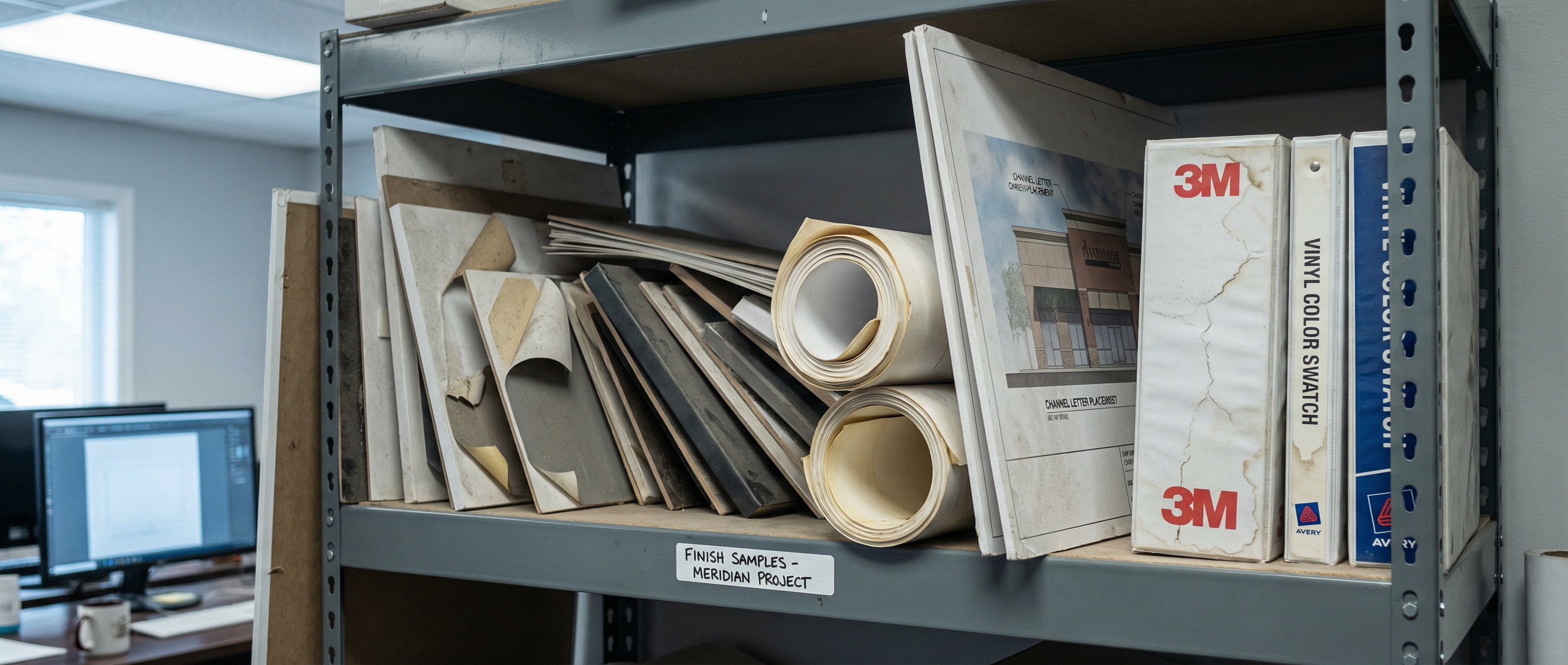
Confession time: there's a greater than zero chance I'm a hoarder. Every scrap bin, every shelf, every drawer stuffed with leftover vinyl and orphaned hardware is a decision I'm avoiding.
Fifty Things I've Learned in Thirty Years (That Nobody Taught Me)
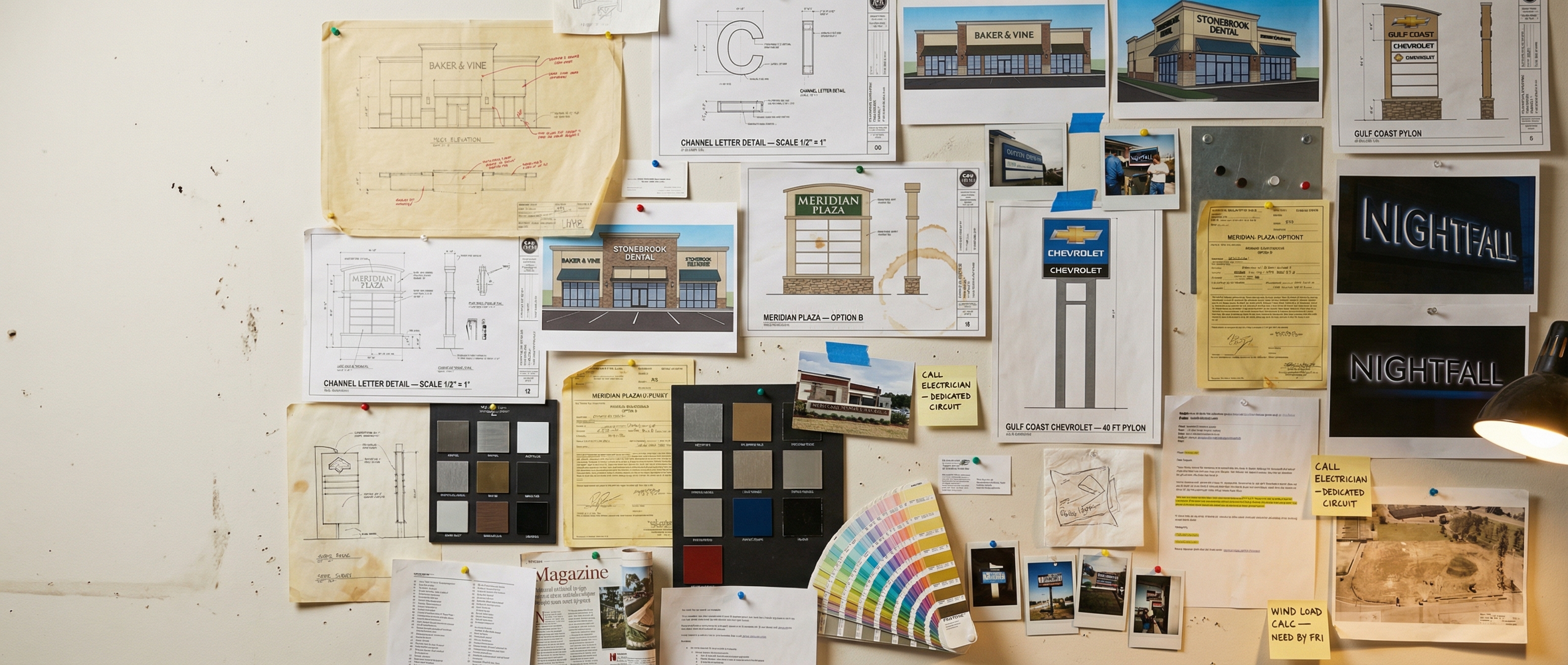
Thirty years of making, fixing, explaining, and occasionally losing sleep over signs. These are the things I had to learn the hard way. Some of them cost me money, some cost me time, a few of them cost me relationships.
How much does a business sign really cost?
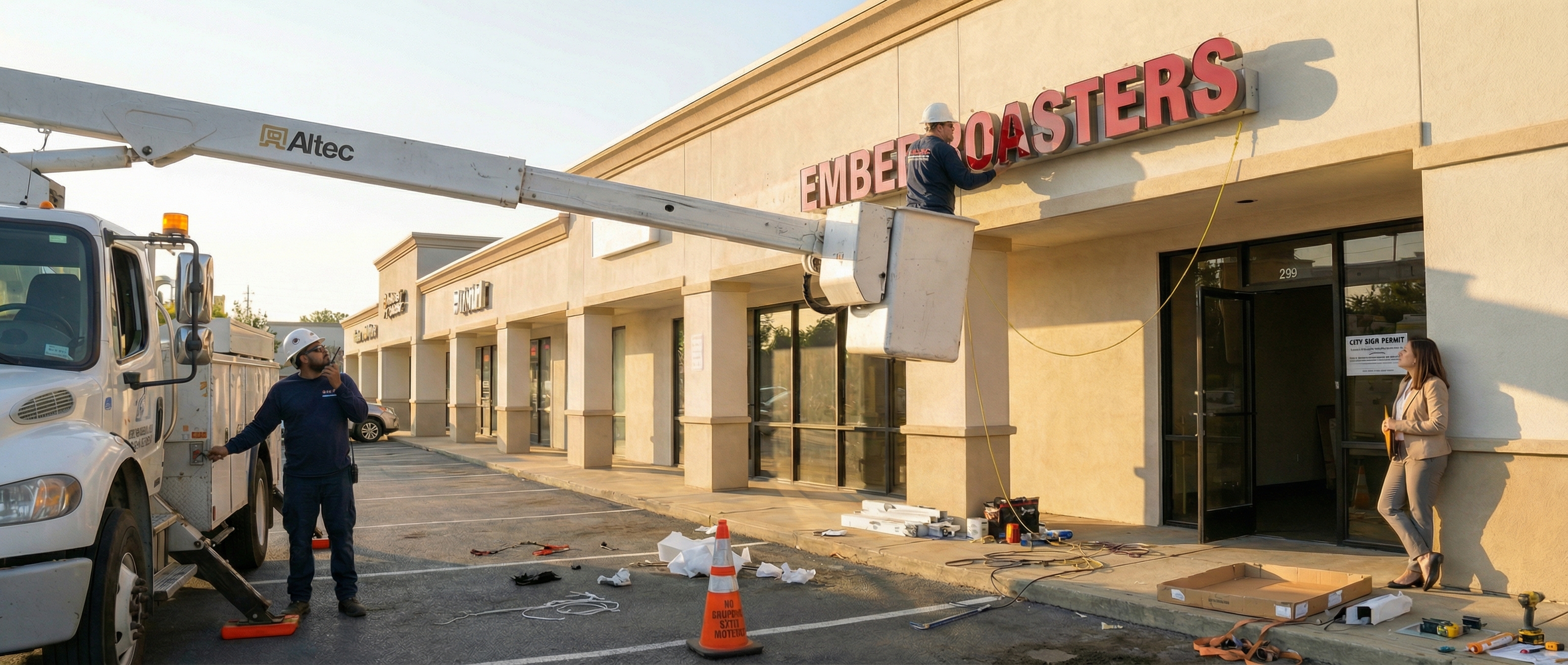
"I just need a sign. How much could it possibly be?" We hear this more often than we should. A business owner sends an email expecting a number somewhere between a nice dinner and a used car.
Good signage
starts with a conversation.
Every project is different. Let’s talk about yours.