Exterior Identity Signs: Early Decisions That Save Late Money
Nobody puts "signage coordination" on the Schematic Design schedule. In 30 years of designing exterior signs, that's the single most reliable source of budget pain I've seen. Not materials, not fabrication, not labor. Timing: the gap between when signage decisions should get made and when they actually do.
Nobody puts "signage coordination" on the Schematic Design schedule. In 30 years of designing exterior signs, that's the single most reliable source of budget pain I've seen. Not materials, not fabrication, not labor. Timing: the gap between when signage decisions should get made and when they actually do.
RENDERINGS
You need a rendering to sell the project. I get it. So somebody drops a logo on the facade in Photoshop or even worse, asks ChatGPT to visualize their logo as a sign on the building, and calls it signage design. The rendering gets approved. Everybody moves on.
The problem is that rendering just committed you to a sign concept nobody has checked against the building's structural capacity, the local sign code, or the landlord's criteria document that might limit you to reverse channel halo-lit letters at 24 inches max with no exposed raceways.
A rendering is a promise you haven't priced yet. The further into construction you get before you price it, the more it costs to keep.
FOOTINGS
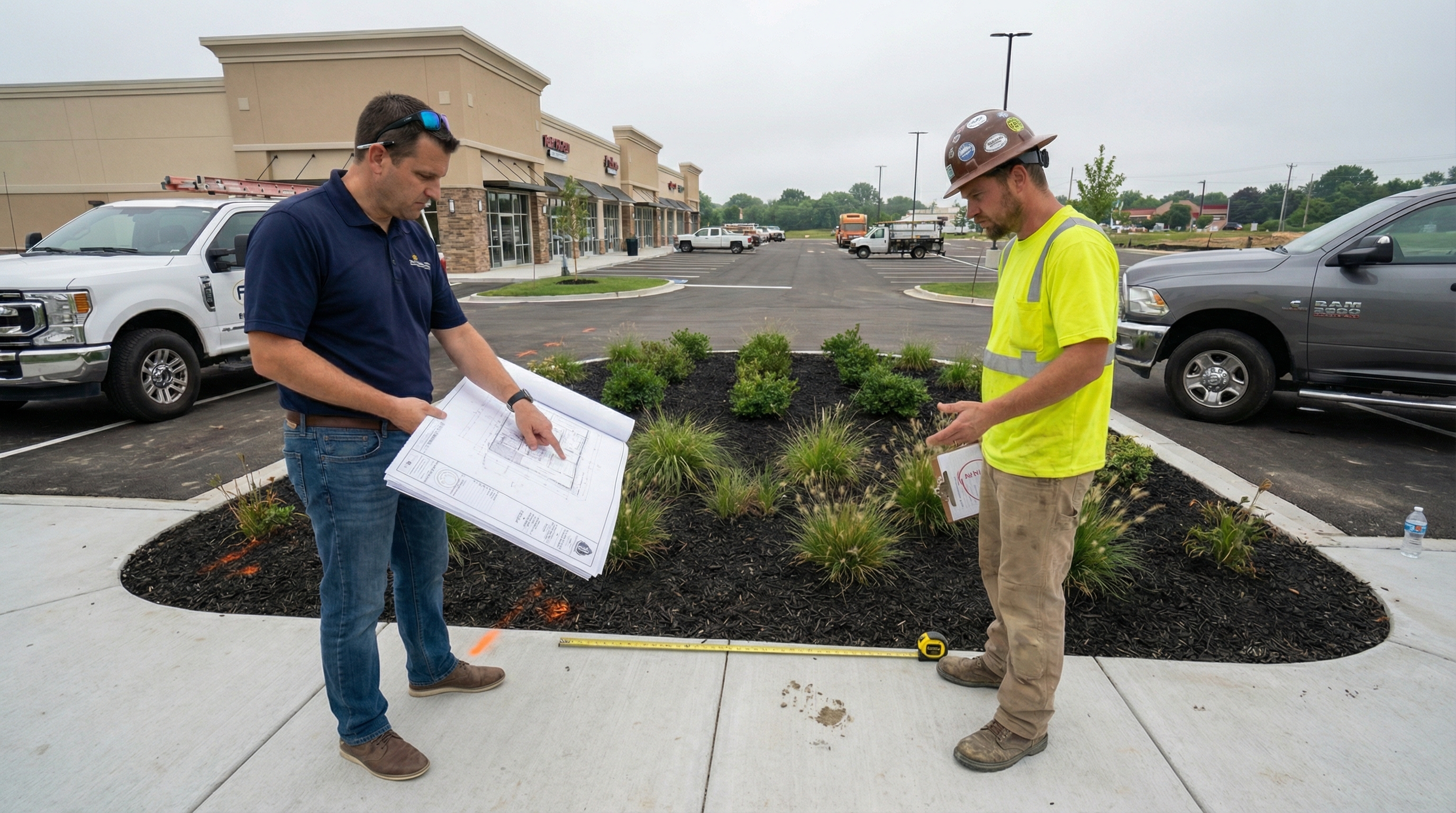
I've watched this one play out dozens of times. Developer wants a monument sign at the entry drive. Architect shows a nice low-profile monument in the renderings. Stone veneer, internally illuminated, maybe 6 feet tall. Gets approved.
Then the sign company shows up and asks: where's the footing?
A monument sign needs a footing engineered for soil conditions, wind loads per ASCE 7, rebar, anchor bolts, and conduit stub-ups, all poured before the landscaping goes in. Most jurisdictions require structural calcs, a separate permit, and an inspection before you can set the sign.
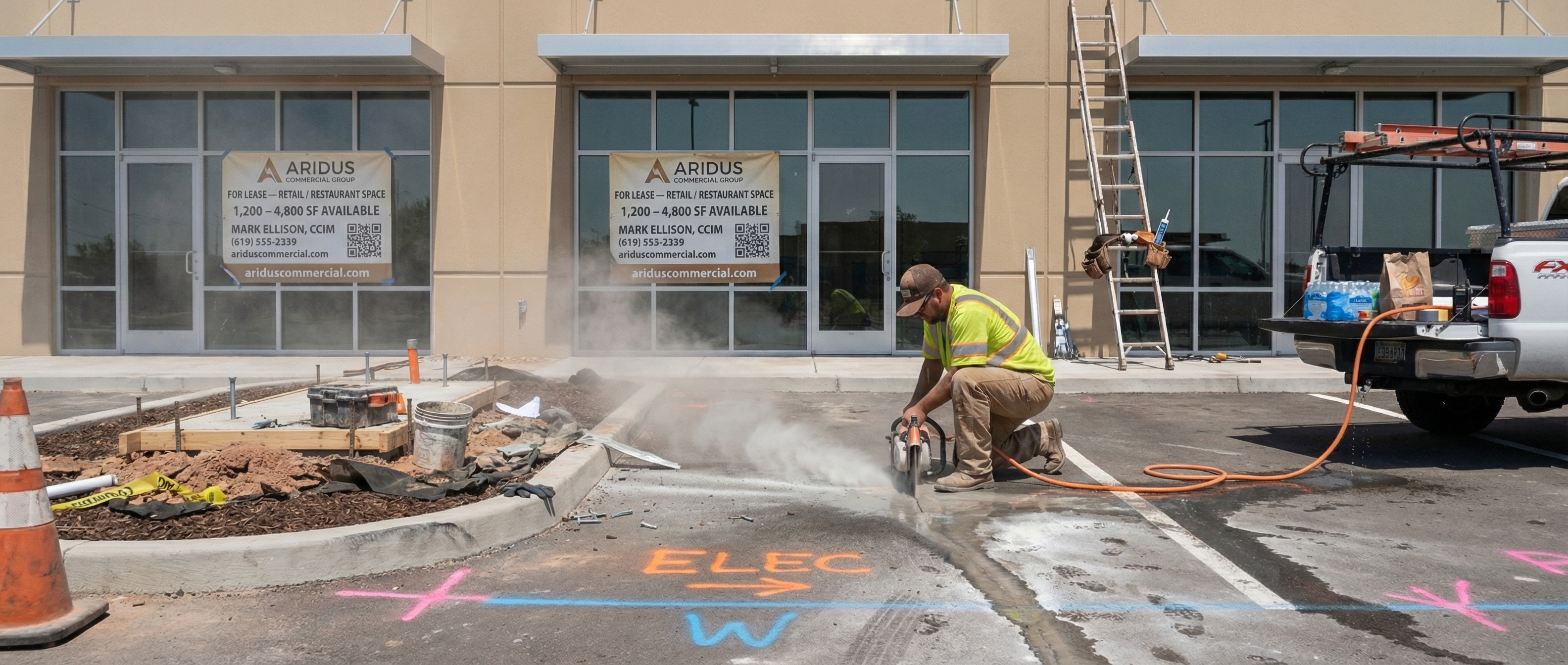
When that gets skipped during site work, the GC has already poured curbs, run irrigation, and paved the entry. Now you're cutting into finished work. I've seen this add $25,000 to a $50,000 sign project. The fix would have been an hour of coordination during SD and a conduit stub in the civil drawings.
WIND
Architects understand wind loads on buildings but there's a consistent blind spot around signs. A wall-mounted channel letter set or a freestanding pylon catches wind, and someone needs to know what's behind that wall before the sign gets engineered. CMU? Steel stud? Tilt-up? Curtain wall? Each has a wildly different capacity for supporting something that might weigh 400 pounds.
When the analysis happens late, either the structural engineer does an emergency review (money, time) or the sign company redesigns to reduce the wind profile (and now the rendering doesn't match). Both avoidable if sign loads are in the structural scope early.
POWER
Illuminated signs need dedicated circuits. Channel letters on a 60-foot storefront might draw 15 to 20 amps. A monument with an electronic message center could pull 40 or more. That's a disconnect switch within sight of the sign per NEC, and for a monument, that's underground conduit at 24 inches minimum under parking areas, installed before asphalt.
I've watched electricians saw-cut through six-month-old concrete to run a circuit that could have been a $200 line item on the original scope because nobody wrote "run conduit to the sign" on the drawings.
LANDLORD CRITERIA
If you're designing tenant space in a multi-tenant property, there's almost certainly a sign criteria document. Maximum sign area, letter heights, approved types, illumination methods, color restrictions, materials, sometimes even font characteristics.
I've seen architects design storefronts with sign concepts that directly violate the criteria. Everyone loves it right up until the landlord rejects the submittal and sends back a 40-page PDF nobody on the team has opened. Now the sign gets redesigned, sometimes the storefront gets modified, sometimes the electrical rough-in is wrong because the sign type changed. All rework.
The criteria doc is a site condition, same as a setback. Worth reading before SD starts.
COORDINATION BY PHASE
- Schematic Design. Approximate sign locations on site plan. Landlord criteria in hand. Illuminated vs. non-illuminated identified. Local sign code confirmed.
- Design Development. Sign foundations coordinated with civil. Conduit and circuits in MEP scope. Wall construction at mounting locations documented. Preliminary sign engineering if it affects structure.
- Construction Documents. Foundation details in civil drawings. Electrical circuits, disconnects, and conduit stubs in electrical drawings. Backing or embed plates at mounting locations.
- Construction Administration. Foundation and conduit confirmed before site work gets buried. Sign installation on GC schedule. Shop drawings reviewed against design and landlord criteria.
THE POINT
Signage is one of the most visible things on a finished building, and it tends to be one of the last things the design team thinks about. I'm not trying to add to anyone's scope, I'm just pointing out that a little coordination in SD and DD keeps the sign program from turning into a five-figure surprise during CA.
Footing in the civil drawings... Power in the MEP scope... Wall capacity confirmed... Landlord rules read... That's the whole list, everything else sorts itself out.
Keep reading

Design for the maintenance workers
We ask this on every project now: how does this sign get opened, cleaned, and serviced without shutting down a hallway, blocking traffic, disassembling half of it in the field, or removing it entirely?

Why old signs feel like they're more honest
Old signs didn't have brand strategy. They didn't have design systems or mood boards or a 46-page identity guide specifying corner radius and exclusion zones. They had a message and a budget. "MOTEL." "GAS." "VACANCY." "COLD BEER."
Design for the person who's already late and slightly panicked
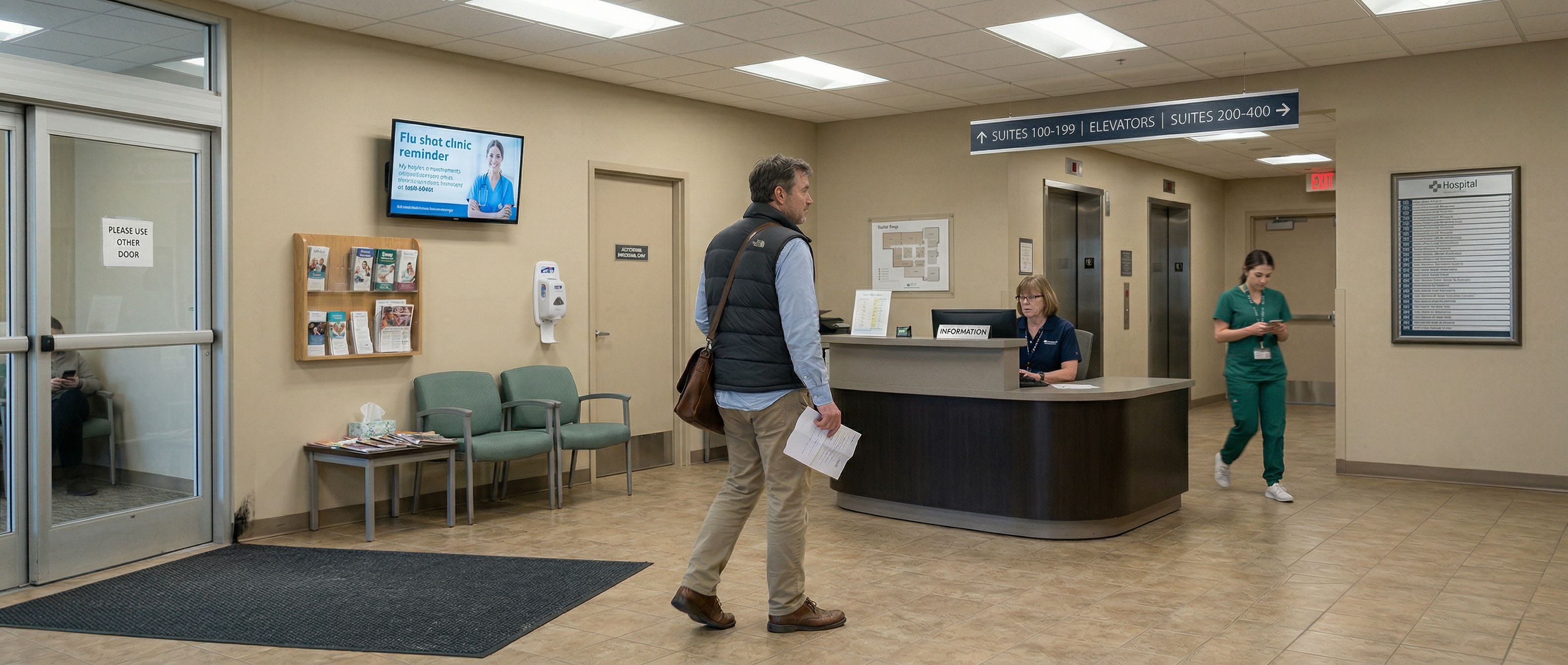
Most wayfinding systems are designed for a person who doesn't exist. Someone calm, focused, walking at a moderate pace with nothing on their mind except getting from point A to point B. Someone who stops at the directory, reads it line by line, and proceeds with full confidence.
Good signage
starts with a conversation.
Every project is different. Let’s talk about yours.